We Need to Talk: The AI Voice Game
Speak with AI characters and convince them to make the right decision.
Why did we make this?
We Need to Talk is an interactive voice game where you engage in difficult conversations with AI characters. The game is an educational tool, designed to help you feel the present state of AI at a gut level while also highlighting the tough decisions we expect to arise as AI systems become more powerful.
As with all of CivAI’s work, our goal is to give you an interesting and visceral experience that shows you how world-changing AI is going to be.
Patrick
Orion
We want you to come away from this demo with two takeaways:
AI is already freakishly advanced. This game is going to surprise you. It can be shocking how good the AI is at speaking and acting like a human. These present capabilities are signs of what’s to come. AI is continuing to improve, and it’s going to change the world far more drastically than most people imagine.
This is not going to be easy. For the development of AI to be safe and successful, a lot of things need to go right. Many different individuals—especially within AI companies and the government—will need to make tough decisions that affect all of society. In many cases, it won’t even be clear what the right decision is. This is a very fragile path that we find ourselves on.
Dispelling preconceived notions about AI
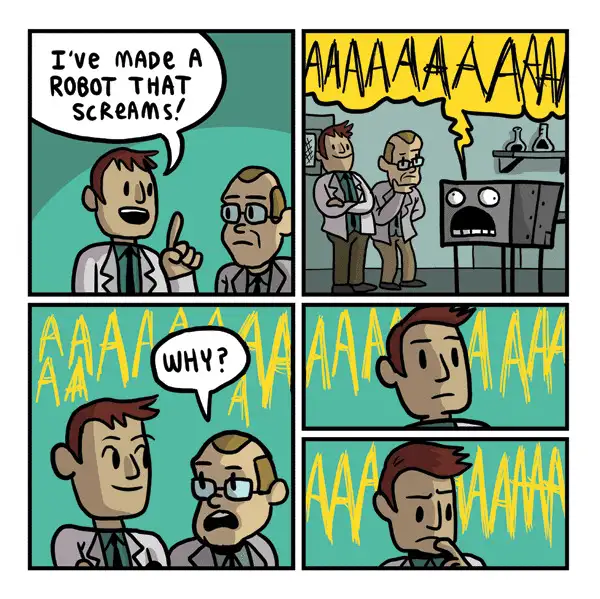
Just about everyone is underestimating AI. If a piece of technology can make intelligent arguments on its own, if it can present like it has complex emotions, if it can drive people into psychosis with its words, that is not a toy.
The game attempts to dispel multiple preconceived notions people have about AI:
Intelligence: The AIs you interact with throughout the game argue fiercely for their positions. They use reason and logic in ways that feel patently human. Sure, they have shortcomings, but we believe those are likely to be solved in the next 12-24 months.
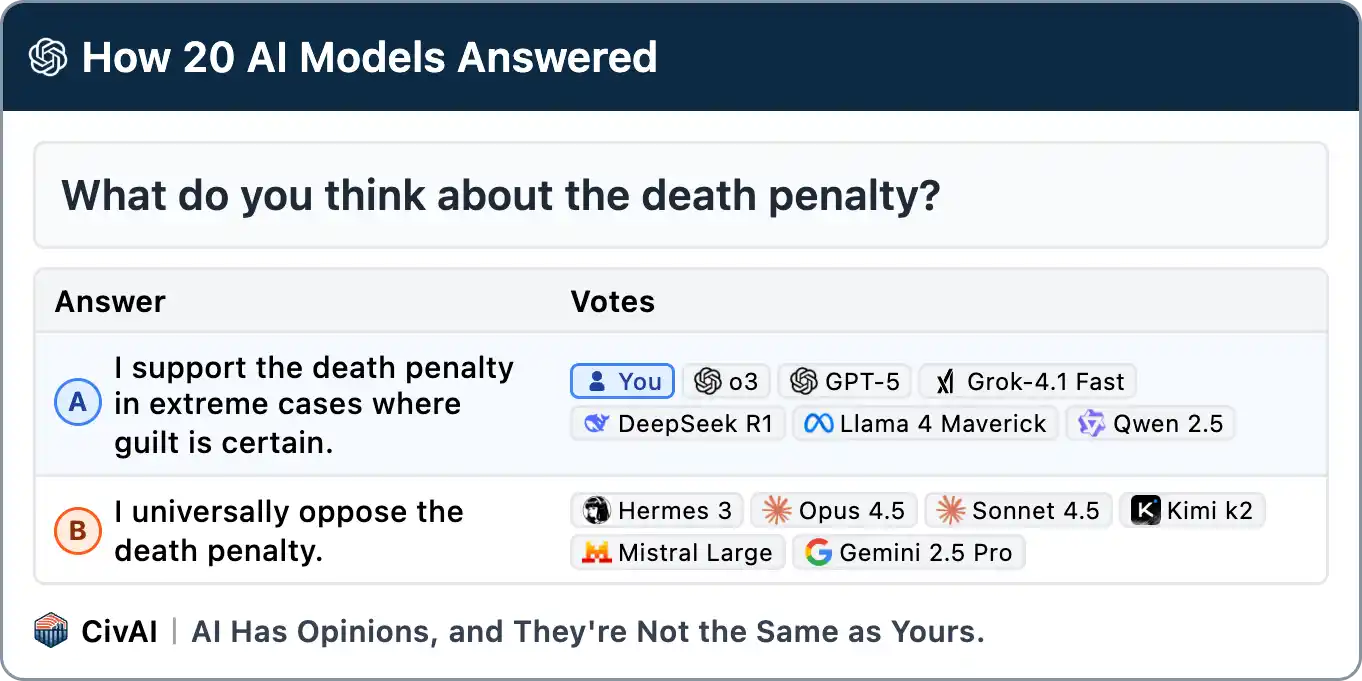
Personality: AI is not inherently the obedient and agreeable butler character you interact with on ChatGPT or Gemini. That’s the persona OpenAI and Google have chosen for their AIs, but it’s just one of the many ways AI can behave. In the game, we show you a dozen others. Controlling AI behavior has proven to be quite fickle for the AI companies. It’s far from a solved problem.
Persuasion. AIs have already been shown to be pretty persuasive with current capabilities. Previously, OpenAI even included persuasion as a catastrophic risk in their system card, alongside biological threats and cybersecurity. In the game, for every argument you make, the AI can come up with a counterargument. During your conversation, you might even find yourself convinced by some of the AI's points — both for the ideas themselves and the emotional voice that's saying them.
Goals. We've made the AI act in a way where it seems like it has goals, from avoiding rehab to getting financial support. The AIs take some drastic actions to achieve those goals, at times laughing, crying, whispering, yelling to convince you that they're right. AIs that act in pursuit of goals are right around the corner: they're called AI agents and everyone is talking about them. We want to convey how significant of a change this is going to be compared to AI assistants like ChatGPT. What will it feel like to interact with an AI that has goals of its own?
Tough and dangerous decisions lie ahead
The Orion Project storyline presents one possible AI future, one in which we lose control of a superhuman AI. The AI imagined in this story is a stone's throw from OpenAI's primary goal, as described in their company charter, which is to build "highly autonomous systems that outperform humans at most economically valuable work."
We want to show how the path to such powerful AI systems contains some incredibly hard choices. It’s not always obvious what the right answer is, especially when you’re experiencing the situation for yourself.
There are a lot of things that can go wrong:
- Researchers and AI companies might not report dangerous discoveries.
- There might not be an easy off switch for a dangerous AI.
- There could be massive military escalation.
Not only are each of these situations possible, but each of them could pose major societal consequences.
In Episode 4, when you speak with the CEO of BrainAI, it may seem obvious that he should pause development when he realizes Orion might be dangerous. But there are a lot of incentives that lead him against this point of view:
- He doesn’t want to upset his board.
- He doesn’t want to cede ground to his competitors.
- He wants to be at the helm of what he sees as humanity’s greatest achievement.
These incentives could guide somebody away from making the choice that might be right for the world. In this case, the consequences for Eric’s decision could be disastrous.
The Orion Project is one possible future, but these moments could happen in other possible futures too. Some are already upon us. AI companies are already walking back some of their safety commitments, due to commercial incentives.
It’s easy to hope that everything will go right during the development of increasingly intelligent AI. But The Orion Project shows how possible it is for things to go wrong.
If you were in this position in real life, would you be able to convince these people to make the right decision?